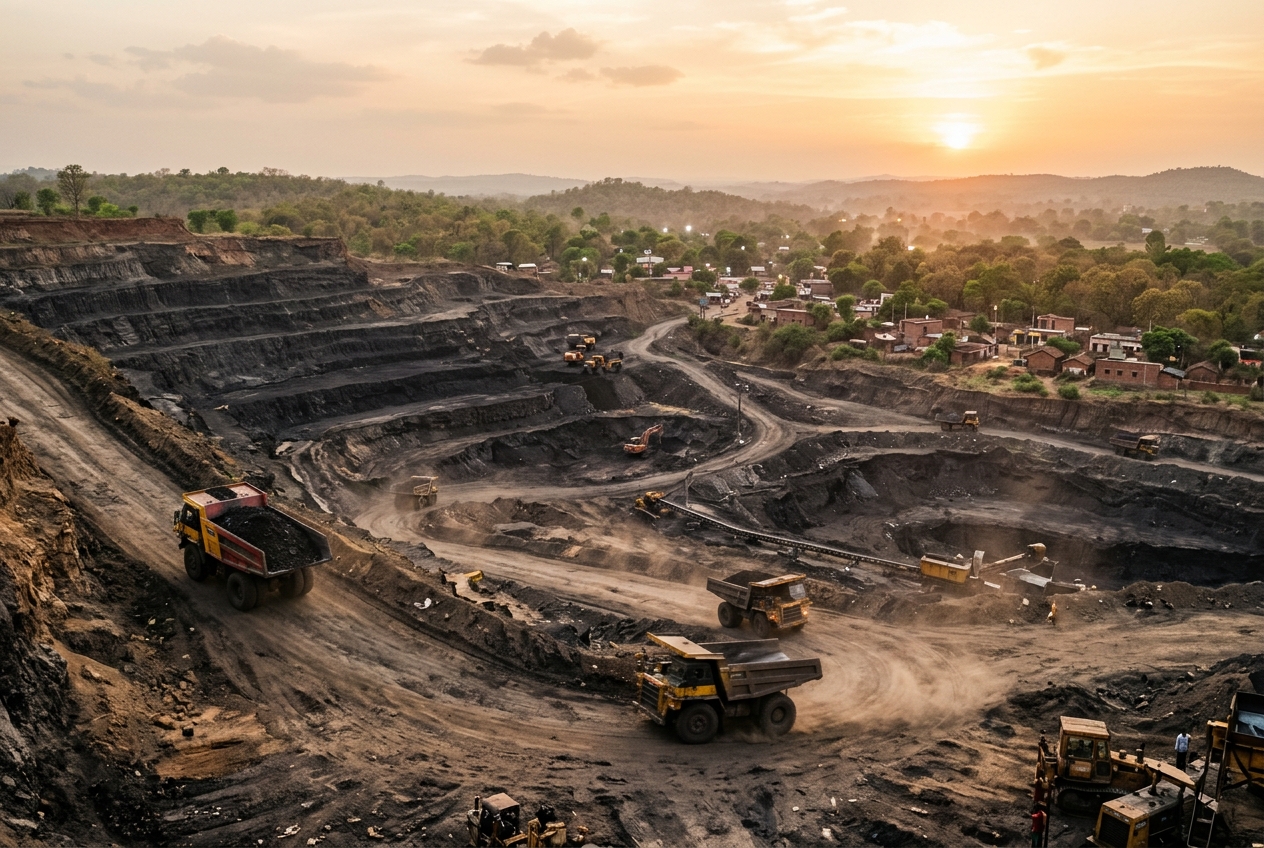
Dhanbad – The Coal Capital of India
Discover Dhanbad, Jharkhand – the Coal Capital of India. Explore its rich history, coal mining heritage, industries, educational institutions and famous tourist attractions.

Dhanbad, popularly known as the Coal Capital of India, is one of the most prominent mining and industrial cities in Jharkhand. Famous for its rich coal reserves, historic mining industry and educational institutions, Dhanbad plays an important role in India's industrial development.
Located in the Chota Nagpur Plateau region, Dhanbad is known for its coalfields, industrial establishments, beautiful lakes, temples and waterfalls. From the famous Jharia Coalfields to the scenic Maithon Dam and Topchanchi Lake, the district offers a unique combination of industrial heritage, history and natural beauty.
Geographical Location of Dhanbad
Dhanbad district is situated in the state of Jharkhand. It lies approximately between 23°37′3″ N and 24°4′ N latitudes and 86°6′30″ E and 86°50′ E longitudes.
The city is located approximately 168 km from Ranchi and 171 km from Jamshedpur.
Dhanbad shares its boundaries with the following districts:
West: Giridih
North: Bokaro
East: Giridih and Dumka
South: Purulia district of West Bengal
Dhanbad is situated approximately 500–1,000 feet above sea level. The soil in the district is predominantly lateritic in nature.
Why Is Dhanbad Called the Coal Capital of India?
Dhanbad is popularly known as the Coal Capital of India and the City of Coal because of its extensive coal deposits and large-scale mining activities.
The Jharia Coalfield, located in the Dhanbad region, is particularly famous for its high-quality coking coal, which is an important raw material for the steel industry.
Coal mining has played a major role in shaping the city's economy, employment opportunities, industrial development and urbanisation.
Several major organisations have contributed to the growth of Dhanbad, including:
Tata Steel
Indian Iron and Steel Company (IISCO)
Bharat Coking Coal Limited (BCCL)
Eastern Coalfields Limited (ECL)
These organisations have helped establish Dhanbad as one of India's most important mining and industrial centres.
History of Dhanbad
Dhanbad has a rich history of growth, urbanisation and migration. However, its early history remains somewhat unclear due to the limited availability of historical records.
The present-day Dhanbad district was formerly part of Manbhum district. According to the Manbhum Settlement Report of 1928, no rock inscriptions, copper plates, old coins or palm-leaf documents were discovered during the survey and settlement operations. Most of the oldest authentic documents available at that time were written on paper and were barely a hundred years old.
Dhanbad remained part of Manbhum district until 1956.
On 24 October 1956, Dhanbad was officially declared a separate district following the recommendations of the States Reorganisation Commission, through Notification No. 1911.
The administrative history of Dhanbad can be understood through the following timeline:
YearHistorical EventBefore 1956Part of Manbhum district24 October 1956Declared a separate district1956–2000Part of Bihar15 November 2000Became part of the newly formed state of Jharkhand
Today, Dhanbad is one of the major urban and industrial centres of Jharkhand.
Rivers of Dhanbad and the Surrounding Region
Dhanbad and the wider Chota Nagpur region are associated with several important rivers that contribute to the geography and natural resources of the region.
Some of the major rivers mentioned in the regional geographical account include:
Damodar
Mayurakshi
Barakar
Koyal
Sankh
Son
Auranga
More
Karo
Bansloi
South Koel
Kharkai
Swarna Rekha
Among these, the Damodar River is particularly important to the Chota Nagpur Plateau.
The Damodar River originates in the Palamu region and flows eastward between the Ranchi and Hazaribagh plateaus. It is joined by several tributaries, including the Bokaro, Konar and Barakar rivers.
The Damodar River has historically played an important role in the industrial and economic development of the region.
Important Institutions and Industries in Dhanbad
Apart from coal mining, Dhanbad is recognised for its educational institutions, research centres, government organisations and industrial establishments.
The district is home to several important public-sector undertakings, research institutions and private-sector organisations.
Research and Educational Institutions
Indian Institute of Technology (Indian School of Mines), Dhanbad
Central Mining Research Institute
Central Fuel Research Institute
Bihar Institute of Technology
Patliputra Medical College
Mining and Industrial Organisations
Bharat Coking Coal Limited (BCCL)
Eastern Coalfields Limited (ECL), Mugma Area
Tata Iron and Steel Company (TISCO)
Indian Iron and Steel Company (IISCO)
Hindustan Zinc Limited
Fertilizer Corporation of India Limited
Project & Development India Limited
Government and Public Organisations
Directorate General of Mines Safety (DGMS)
Damodar Valley Corporation (DVC)
Mineral Area Development Authority (MADA)
Central Industrial Security Force (CISF)
Divisional Railway Office (East Central Railway)
Central Coal Workers' Welfare Organisation (CCWO)
Coal Mines Provident Fund (CMPF)
These institutions contribute to Dhanbad's reputation as an important centre for mining research, technical education, industrial operations and public administration.
Tourist Places and Attractions in Dhanbad
Although Dhanbad is primarily famous for its coal industry, the district and its surrounding areas also offer several interesting tourist destinations.
From peaceful lakes and boating facilities to temples and waterfalls, there are many places worth exploring.
1. Maithon Dam
Maithon is one of the most popular tourist destinations near Dhanbad. Located approximately 45 km from Dhanbad Railway Station, Maithon Dam is known for its scenic surroundings, large reservoir and boating facilities.
It is a popular destination for families, nature lovers and weekend visitors.
2. Kalyaneshwari Temple
Kalyaneshwari Temple is an important religious destination near Maithon. Dedicated to Goddess Kalyaneshwari, the temple attracts devotees from Jharkhand, West Bengal and neighbouring regions.
3. Topchanchi Lake
Located approximately 37 km from Dhanbad Railway Station, Topchanchi Lake is known for its beautiful natural surroundings and peaceful atmosphere.
Surrounded by green hills, it is a popular place for picnics, photography and spending time with family.
4. Bhatinda Falls
Bhatinda Falls, located approximately 14 km from Dhanbad Railway Station, is another popular attraction in the district.
The waterfall is surrounded by rocks and greenery, making it an appealing destination for nature lovers and visitors.
5. Shakti Mandir
Shakti Mandir is one of the well-known religious places in Dhanbad city. Dedicated to Goddess Durga, it attracts devotees throughout the year, particularly during Navratri.
6. Lillori Sthan Mandir
Lillori Sthan Mandir, situated approximately 19 km from Dhanbad, is a well-known religious destination in the Katras region. The temple holds religious significance for local devotees.
Other Attractions
Other places of interest in and around Dhanbad include:
Charak Pathar
Chati Gobindpur
Gopalpur
Jhinjhipahari
Meva
Panrra
Chark-Khurd
Panchet
These destinations add to the cultural, religious and natural attractions of the district.
Climate and Weather of Dhanbad
Dhanbad experiences a typical seasonal climate, with hot summers and relatively cold winters.
The approximate temperature ranges are:
SeasonTemperature RangeSummer20°C to 39°CWinter2°C to 20°C
Summers can be hot, while winters are generally cooler and more comfortable for outdoor activities and sightseeing.
Education and Economic Importance
Dhanbad is not only an important mining city but also a significant educational and research centre.
The presence of the Indian Institute of Technology (Indian School of Mines), along with several technical colleges and research organisations, has made Dhanbad an important destination for students pursuing mining, engineering and other technical disciplines.
The city's economy has historically been closely connected to coal mining, steel production, industrial operations, transportation and associated businesses.
Its railway network and industrial infrastructure further strengthen its importance as a commercial centre in Jharkhand.
Conclusion: Dhanbad – A City Built Around Coal, Industry and History
Dhanbad is much more than just a coal-mining city. It represents an important chapter in India's industrial development and has a rich combination of history, education, culture, religious destinations and natural beauty.
From the historic Jharia Coalfield and major industrial organisations to the scenic Maithon Dam, Topchanchi Lake and Bhatinda Falls, Dhanbad has something to offer different kinds of visitors.
Known as the Coal Capital of India, Dhanbad continues to play an important role in Jharkhand's economy and India's industrial growth.
Whether you are interested in its mining heritage, educational institutions, history or tourist attractions, Dhanbad is a city worth exploring.
Looking for a shop or service in Dhanbad? Search phone numbers, timings and reviews on Dhanbad Bazaar.
Search Dhanbad